
Best pour-over coffee makers: V60, Chemex, Kalita, Origami, and the rest, compared
Pour-over isn't one method. It's a family of brewing approaches with measurably different results. Here's what actually separates the major brewers, what to buy, and where to buy it.
If you search "best pour-over coffee maker" you'll find a hundred articles that all recommend the same five products in roughly the same order, then send you to Amazon for all of them. This isn't that.
Pour-over brewers differ from each other in three technical dimensions that matter: the geometry of the brew bed, the design of the drainage system, and the thickness of the filter. These three variables — not marketing claims, not aesthetics, not what the cool baristas use — drive almost everything you'll taste in the cup. The Specialty Coffee Association has documented that basket geometry alone affects flavor as much as grind size does (SCA).
Once you understand those three axes, choosing a brewer is mostly a matter of deciding what you want from it: maximum control, maximum forgiveness, or maximum clarity. Most of the brewers you'll see compared elsewhere fit neatly into one of those positions.
This guide walks through the brewers worth knowing, what they actually do differently, and where to buy them. We've split the buying paths between manufacturer sites (best for product information and authentic stock) and Amazon (faster shipping, but specialty coffee equipment has authenticity issues there worth understanding). We've also linked to specialty retailers like Prima Coffee and Sweet Maria's where they're the legitimate primary channel.
If you're new to pour-over and want the method itself, start with our pour-over how-to guide. If you want the ratios, our ratio guide has the calculator. This article is for picking the equipment.
The three things that actually matter
Before the brewer-by-brewer breakdown, the framework. Pour-over brewers vary on three technical axes. Almost everything else is downstream of these three.
Brew bed geometry: cone vs flat. A conical brew bed (V60, Origami, Melitta) creates a deep coffee bed where water travels through more grounds at the center and less at the edges. A flat-bottom brew bed (Kalita Wave, Bee House) creates a shallow, even layer where water passes through roughly the same depth of coffee everywhere. Research published in the Journal of Food Science found these geometries produce measurably different sensory profiles, particularly in how sweetness, bitterness, and acidity express across roast levels (Frost et al., 2019). Flat-bottom designs tend to be more forgiving of inconsistent pouring; conical designs tend to reward precision.
Drainage design: how fast water leaves the bed. A V60 has a single large hole and lets water move at whatever rate the grind and pour technique dictate. A Kalita Wave has three small holes that meter the flow rate regardless of how you pour. A Chemex's drainage is governed primarily by its filter, not its hole geometry. These design differences mean a fast-draining brewer requires finer grinds and slower pours, while a slow-draining brewer accommodates wider grind ranges.
Filter thickness: what the paper actually removes. Standard pour-over filters allow some oils and fines through. Chemex's bonded paper is roughly 20-30% thicker than standard filters and removes more lipids and sediment, producing a measurably cleaner cup (Drip Roast). The chemistry is documented: paper filters retain the cafestol diterpenes that pass through metal or cloth filters, with thicker papers retaining more (Rendón et al., 2017). This is why Chemex coffee tastes "cleaner" than V60 coffee even with identical beans and ratios — the filter is doing different work.
These three variables, not the brand, are what separate the brewers. Now the brewers themselves.
Hario V60
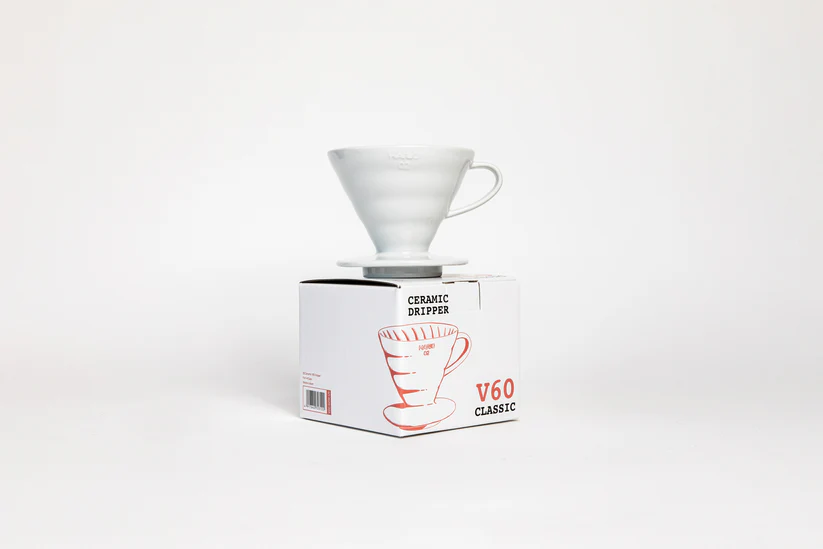
The V60 is the de facto reference brewer in specialty coffee. Most pour-over recipes assume a V60 unless they specify otherwise. The shape is a 60-degree cone with spiral interior ribs and a single large drainage hole — Hario's own product description confirms this design lets users control flow rate primarily through grind size and pour technique (Hario USA).
The standard size is the 02, suitable for 1-4 cups of brewed coffee (Hario USA). The smaller 01 is for very small batches; the larger 03 is for hosting. For most home brewers, the 02 is what you want.
What it's good at: maximum user control. With a V60, every variable matters and is your responsibility. Grind size, water temperature, pour speed, pour pattern, agitation level — all of these meaningfully change the cup. For people who enjoy the craft of brewing and want to dial in their technique across different coffees, the V60 is the most expressive tool you can buy.
What it's not good at: forgiveness. The same control that makes the V60 expressive makes it unforgiving. Sloppy pours produce uneven extraction; wrong grind sizes either choke the bed or rush through it; cold water under-extracts noticeably. The V60 is consistently described in serious coffee guides as requiring more skill than other pour-over brewers (Serious Eats).
Material choice — plastic, ceramic, or glass: Plastic has the lowest thermal mass and is most thermally forgiving for casual users. Ceramic and glass look better but require aggressive pre-heating to avoid sour, under-extracted cups; they pull heat from the brew water until they reach equilibrium. The performance difference is real but easily managed by pre-heating with hot water for 30 seconds before brewing.
Where to buy: The Hario V60 is widely available. The most authentic and best-supported source is Hario's own site for product information, with both plastic and ceramic versions available. For Amazon shoppers, see this ceramic V60 02 listing; other variants also appear from multiple sellers, and quality varies. If buying on Amazon, look for "Hario USA" as the seller specifically — there are gray-market V60s in circulation. Specialty retailers like Prima Coffee and Sweet Maria's sell authentic V60s with reliable provenance.
Verdict: Buy the V60 if you want to learn pour-over as a craft. Skip it if you want consistency without thinking.
Chemex
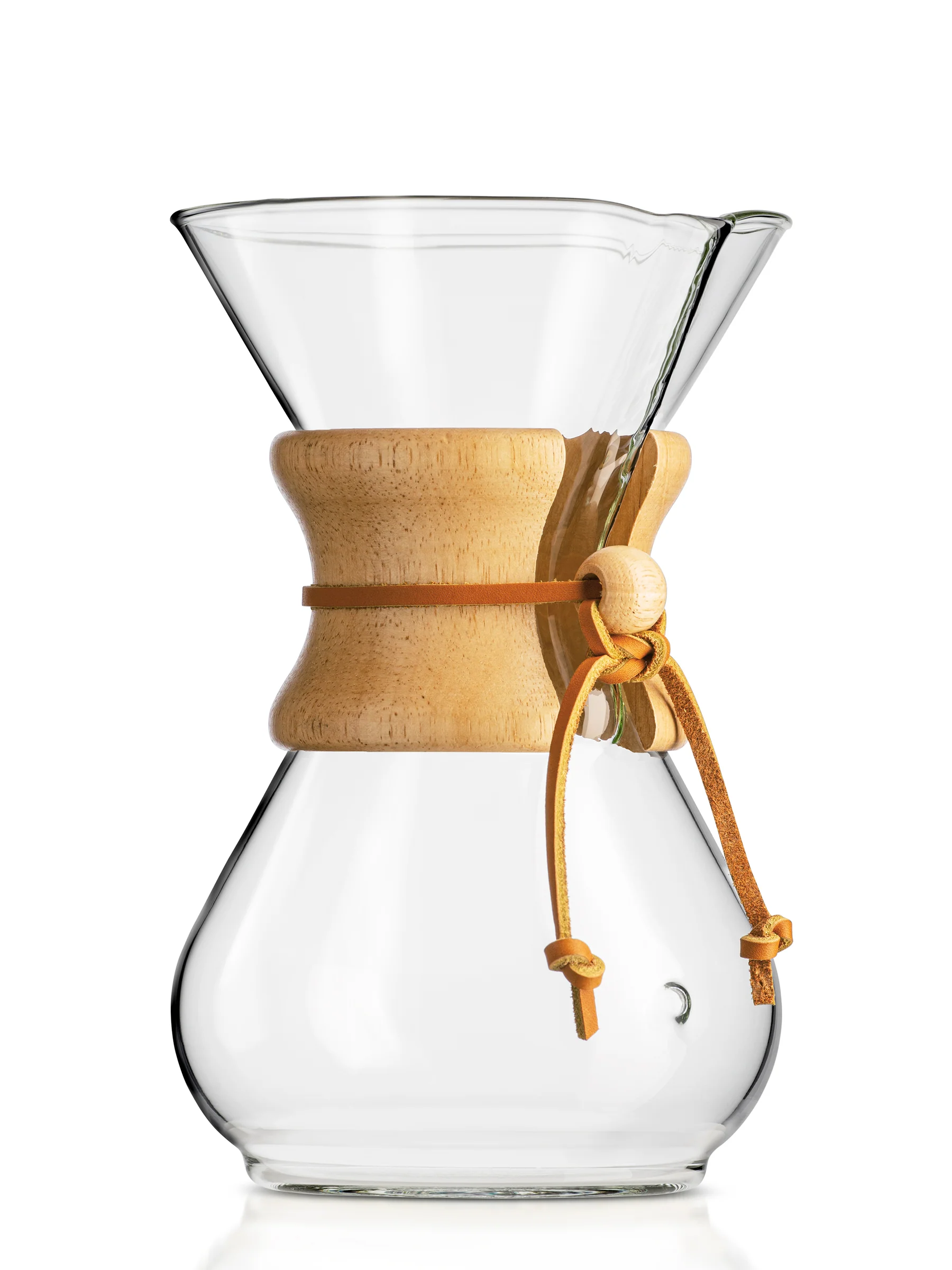
The Chemex is the brewer that lives in the Museum of Modern Art's permanent collection (Chemex). It was designed in 1941 by chemist Peter Schlumbohm, and the design hasn't meaningfully changed since. It's both a brewer and a serving carafe in one piece — an hourglass-shaped borosilicate glass vessel with a wood collar and leather tie.
What makes the Chemex distinct isn't the carafe — it's the filter. Chemex's bonded paper filters are notably thicker than standard pour-over filters, removing more oils and sediment than any other common pour-over brewer (Drip Roast). The filtration is so effective that Chemex coffee is sometimes described as tea-like in body. The peer-reviewed coffee science literature confirms paper filters retain coffee oils that other methods don't (Rendón et al., 2017); thicker filters retain even more.
What it's good at: clarity and batch brewing. The Chemex 6-cup makes about 30 oz of brewed coffee; the 8-cup makes about 40 oz; the 10-cup makes about 50 oz (Chemex 6-cup, Chemex 10-cup). For households where multiple people drink coffee in the morning, or for entertaining, this is the obvious pour-over choice. The cup is exceptionally clean — bright, light-bodied, with sharp definition between flavor notes.
What it's not good at: body and convenience. Chemex coffee can taste thin to drinkers who prefer the heavier mouthfeel of French press or espresso. The carafe is also notoriously awkward to clean (the narrow neck means a regular sponge doesn't fit), and the glass is fragile. The thick filters need to be unfolded specifically (three layers on the spout side, one on the back) — get this wrong and the brew runs slow.
Sizing: The 6-cup is the popular default, but the 8-cup gives you more headroom for blooming and works just as well for smaller batches. Unless you specifically need single-cup capability, the 8-cup is the more forgiving choice. The 10-cup is for serious entertaining.
Where to buy: Chemex direct for the most reliable source. Prima Coffee carries the 10-cup with detailed brewing recommendations. For Amazon shoppers, see this 6-cup Chemex listing; Chemex also sells through Amazon and other sizes are widely listed — authenticity is less of a concern there than for V60s, and Amazon-sold Chemex carafes are typically authentic.
Verdict: Buy a Chemex if you brew for more than yourself, or if you specifically want the cleanest possible cup. Skip it if you want body and convenience.
Kalita Wave
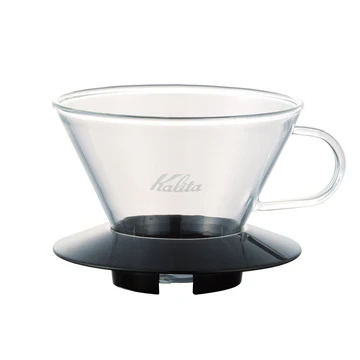
The Kalita Wave is the brewer most often recommended to specialty coffee beginners — and for technical reasons, not just opinion. The flat bottom and three small drainage holes work together to produce more even saturation than conical brewers can (Kalita USA). The flow restriction means you can't pour too fast; the flat bed means water passes through roughly equal coffee depth at all points. Both factors reduce the impact of inconsistent technique.
The result, consistently described across reviewers, is a brewer that's "more forgiving" and "doesn't require as much pouring precision" as the V60 (Serious Eats). WIRED's review of the Kalita Wave explicitly attributes its forgiveness to the design: the three holes "restrict flow" and "ensure even saturation" regardless of pour technique (WIRED).
Sizing — 155 vs 185: The Wave 155 is a true single-cup brewer, comfortable for 8-10 oz drinks. The Wave 185 is the daily driver for most people, handling 1-3 cups (roughly 12-24 oz). If you'll only ever brew single cups, the 155 is more efficient — its smaller bed depth maintains better extraction at low coffee doses. If you might brew for two people occasionally, the 185 is more flexible.
The filter availability problem: Kalita Wave filters are not always easy to find locally. The Wave's flat bottom and crinkled walls require Wave-specific filters; standard cone or basket filters won't fit. If you don't live near a specialty coffee retailer, you'll be ordering filters online. This is a real consideration before purchase. Prima Coffee, Sweet Maria's, and Amazon all stock genuine Kalita Wave filters; just don't expect to find them at your grocery store.
Material: The Kalita Wave comes in glass, ceramic, and stainless steel. The glass version is the most common and works well. The stainless steel version has a known issue where the filter can sag and partially block the drainage holes; this is documented in user reviews and is the main reason most enthusiasts recommend the glass or ceramic versions over stainless.
Where to buy: Kalita USA is the manufacturer source. Olympia Coffee carries the stainless 185 with reliable provenance. For Amazon shoppers, see this Kalita Wave listing; other sizes and sellers also appear — confirm you're ordering the Wave 185 glass (or the size you intend) before checkout. Kalita filters are widely available on Amazon as well. For first-time buyers, Sweet Maria's and Prima Coffee are reliable specialty channels with knowledgeable customer service.
Verdict: Buy the Kalita Wave 185 if you want consistent results with less learning curve. It's the brewer we'd recommend to most people most of the time. Skip it if you specifically want the maximum control of a V60 or the clarity of a Chemex.
Origami Dripper
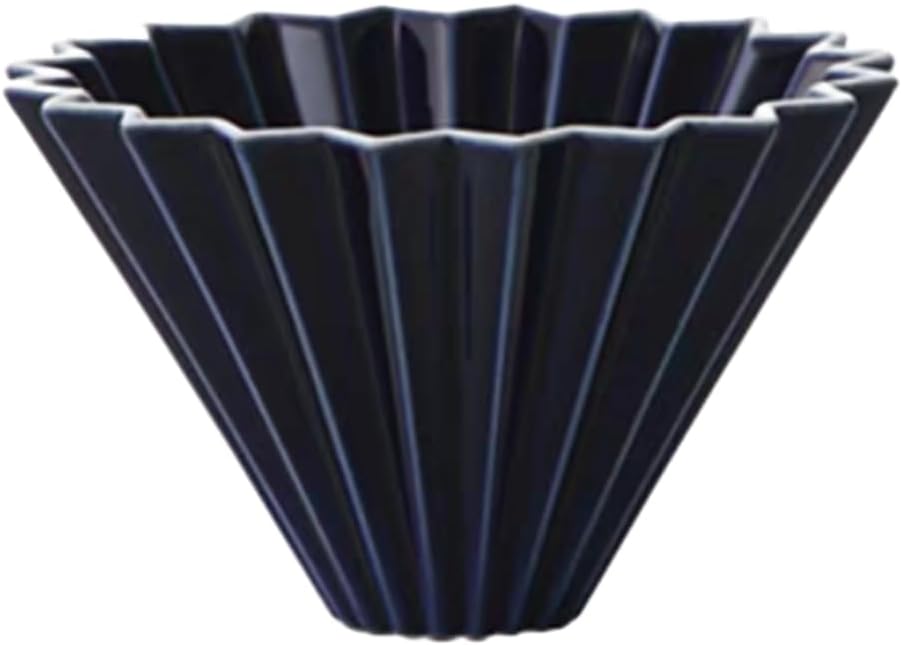
The Origami is the trendier modern choice in pour-over — it's the brewer that's been used in recent World Brewers Cup competitions and has accumulated a reputation as the "I did my homework" choice for serious enthusiasts. The standout feature is filter compatibility: the Origami's prominent ribbed walls work with both V60-style cone filters and Kalita Wave-style flat-bottom filters, letting you switch between brewer behaviors using only filter choice (The Roasters Pack).
This is genuinely unique. With a V60 you get cone behavior. With a Kalita you get flat-bottom behavior. With an Origami you can switch between them by swapping filters, getting one geometry one day and another the next. The deep ribs increase airflow around the filter, allowing fast drawdown without vacuum effects, which is part of why competition baristas favor it (Podium Coffee Club).
Origami vs Origami Air: The original Origami is ceramic. The newer Origami Air is plastic and offers better thermal stability (lower thermal mass means less heat absorbed by the brewer) at a lower price point. The plastic version is the performance choice; the ceramic version is the aesthetic choice. Both work well; the Air is more thermally forgiving for casual users.
What it's good at: flexibility. If you brew different coffees and want to express them differently (cone for clarity, flat-bottom for sweetness), the Origami lets you do that with one brewer. Competition usage suggests the design genuinely supports high-skill brewing.
What it's not good at: beginner-friendliness. Despite its modern reputation, the Origami is not simpler than a V60 — it's more flexible, which is different. A beginner buying an Origami because they read it's "the new thing" will face the same learning curve as a V60 buyer, with additional decisions about filter choice on top. This is the brewer for people who already know what they want and want options to tune.
Where to buy: The Origami has limited US distribution. The Roasters Pack stocks it with brewing recipes. Prima Coffee carries it. Amazon's stock is inconsistent — some sellers are authentic, others are not. Buying from a specialty coffee retailer is the safer path.
Verdict: Buy an Origami if you're already an enthusiast and want to experiment across cone and flat-bottom geometries. Skip it if you're new — start with a V60 or Kalita and graduate to Origami later if you want.
Clever Coffee Dripper
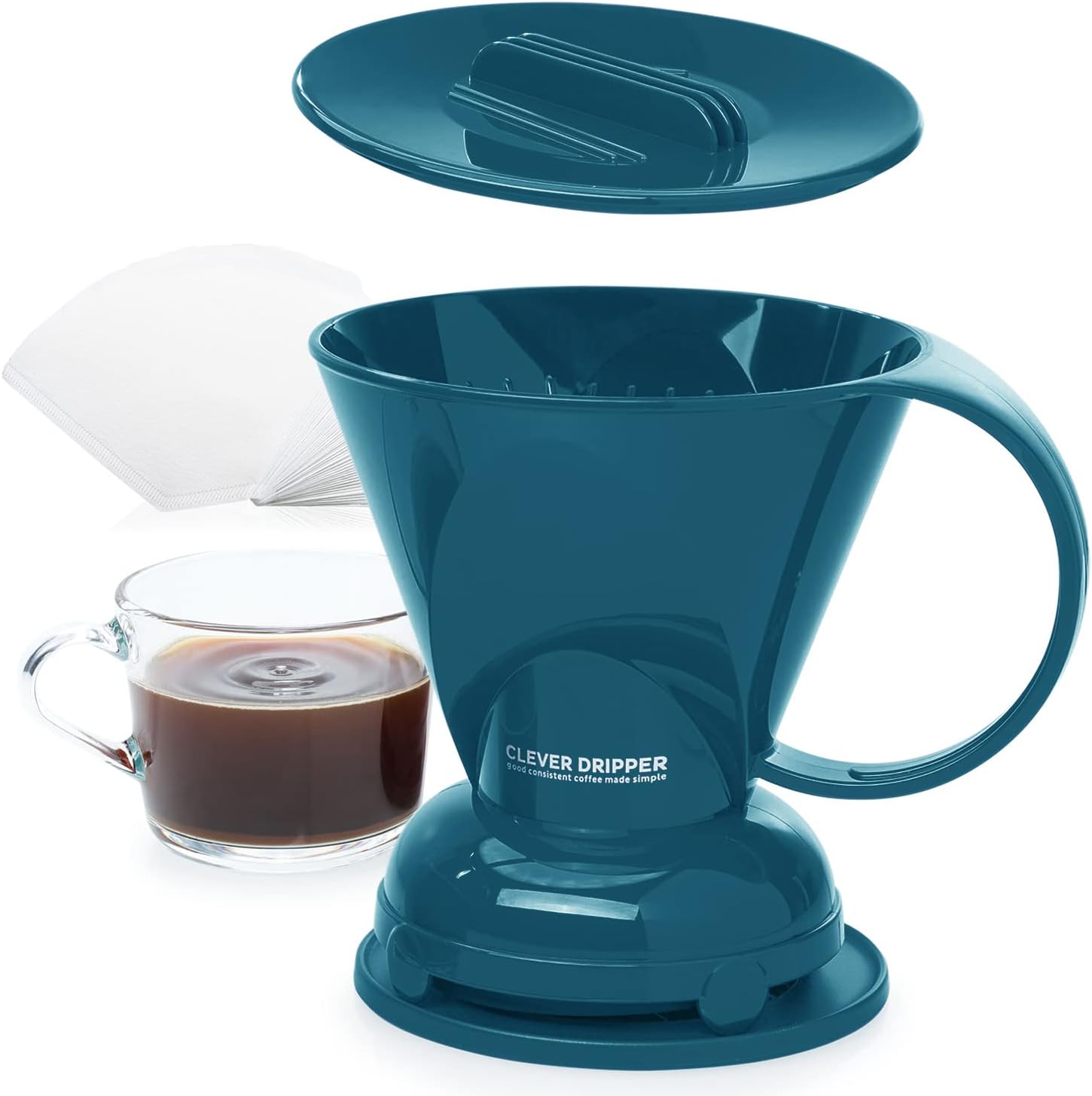
The Clever Dripper is the smartest "easy mode" pour-over option, and it deserves more attention than it gets. It's a hybrid — coffee steeps in a closed brew chamber (immersion, like a French press) until you set the brewer on top of a cup, which opens a valve and drains the brew through a paper filter (LowKey Coffee Snobs).
This design eliminates pour technique as a variable. You add coffee, add water, wait, set on cup, drink. No gooseneck kettle required. The result combines French press fullness with paper-filter cleanliness — most reviewers describe it as more forgiving than any pour-over while producing better cups than any French press (Coffee Cantata).
Why it doesn't get more attention: The Clever isn't fashionable. It's plastic, it's not visually striking, and it doesn't carry the prestige of a V60 or Origami. Specialty coffee snobbery tends to skip it. But the Clever is genuinely the right answer for a specific audience: people who want specialty-level cup quality without learning manual pour-over technique.
What it's good at: consistency without skill. The brew time is the variable you control (typically 3-4 minutes), not the pour. Forgetting to time it perfectly produces a slightly different cup, not a ruined one. The Clever is also dramatically cheaper than other options — typically $25-35.
What it's not good at: the upper bound of cup quality. A perfectly executed V60 with great beans and great technique will outclass a Clever brew of the same beans. But a casual V60 brew can underperform a casual Clever brew, because the V60's variance is wider.
Where to buy: The Clever Dripper is widely available on Amazon — start with this Clever Dripper listing. There's no manufacturer-direct sales channel that's better than Amazon for this product. Specialty retailers like Sweet Maria's and Prima Coffee also stock it.
Verdict: Buy a Clever if you care about specialty coffee but don't want to learn pour-over technique. It's the most underrated brewer in this category.
Other brewers worth a brief mention
Melitta Pour-Over Cone
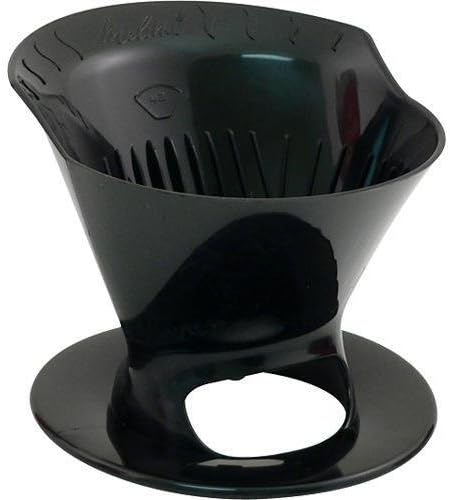
The Melitta cone is the grandparent of paper-filter brewing — Melitta invented the paper coffee filter in 1908, and the cone design hasn't fundamentally changed. It uses a single small drainage hole, naturally restricting flow and making it more forgiving than the V60 but less capable of high-end clarity. It's inexpensive, widely available, and absolutely capable of good coffee, but it's not the most expressive tool for specialty beans.
Many readers will already own a Melitta, having bought one years ago without thinking about it. The honest answer: it's good enough with limits. If you're brewing grocery store coffee, a Melitta is fine. If you're brewing specialty coffee from a quality roaster, you'll get more from your beans with a V60 or Kalita.
Where to buy: Amazon — see this Melitta pour-over cone listing. The Melitta is genuinely a mass-market product where Amazon is the primary channel.
Bee House Dripper
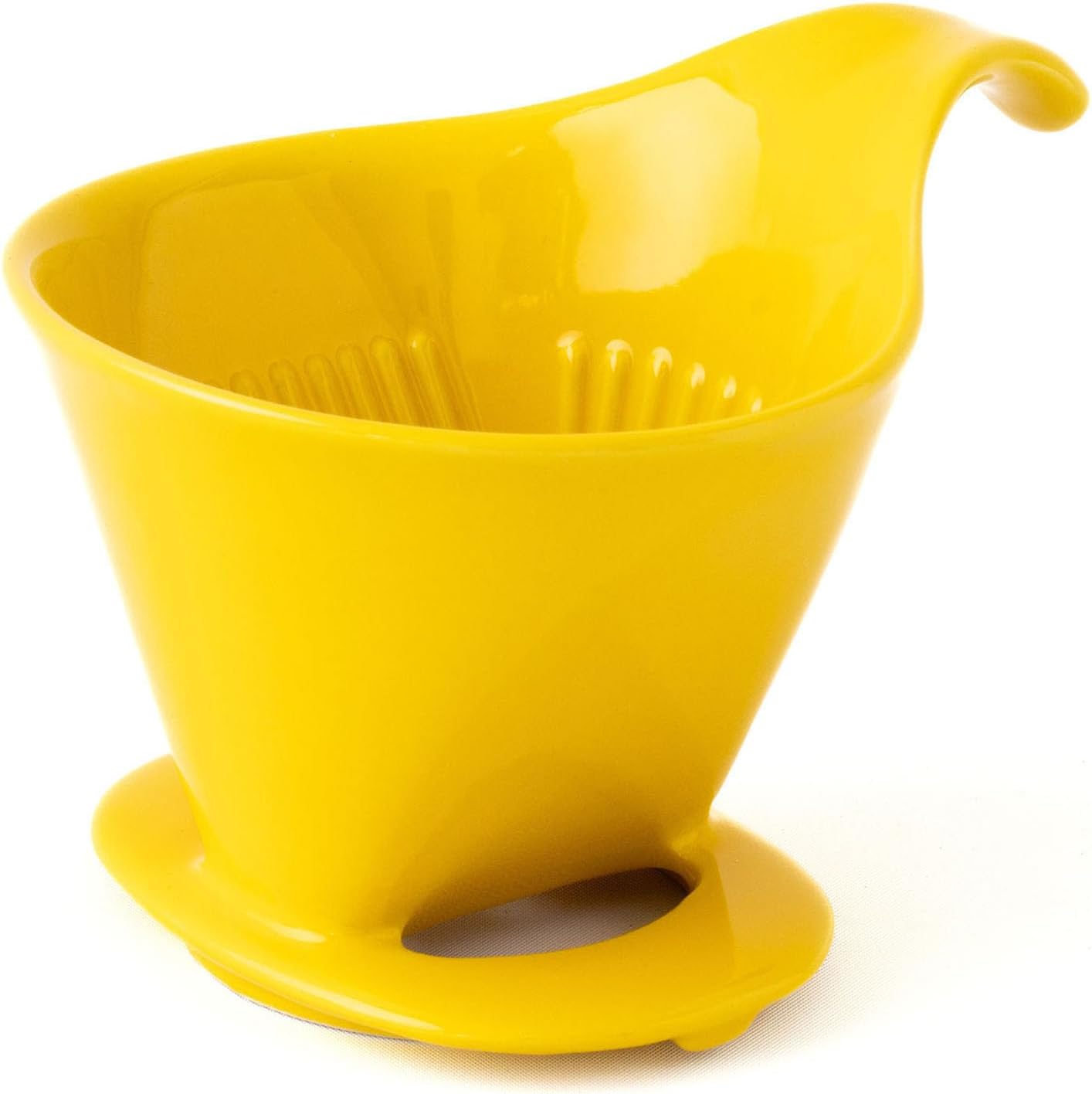
The Bee House is a quiet-cult favorite in specialty coffee. It uses a two-hole drainage design and accepts standard Melitta-style filters (which are dramatically easier to find than Kalita Wave filters). Behavior is similar to the Kalita — naturally restricted flow, forgiving extraction — but with a simpler product and easier-supplied consumables.
For readers who like the idea of a flat-bottom brewer but don't want the Kalita filter availability problem, the Bee House is the answer. It doesn't appear in many round-ups because it's not visually distinctive, but the actual brew quality is competitive with the Kalita.
Where to buy: Sweet Maria's stocks the Bee House reliably. For Amazon shoppers, see this Bee House dripper listing.
Fellow Stagg X / XF
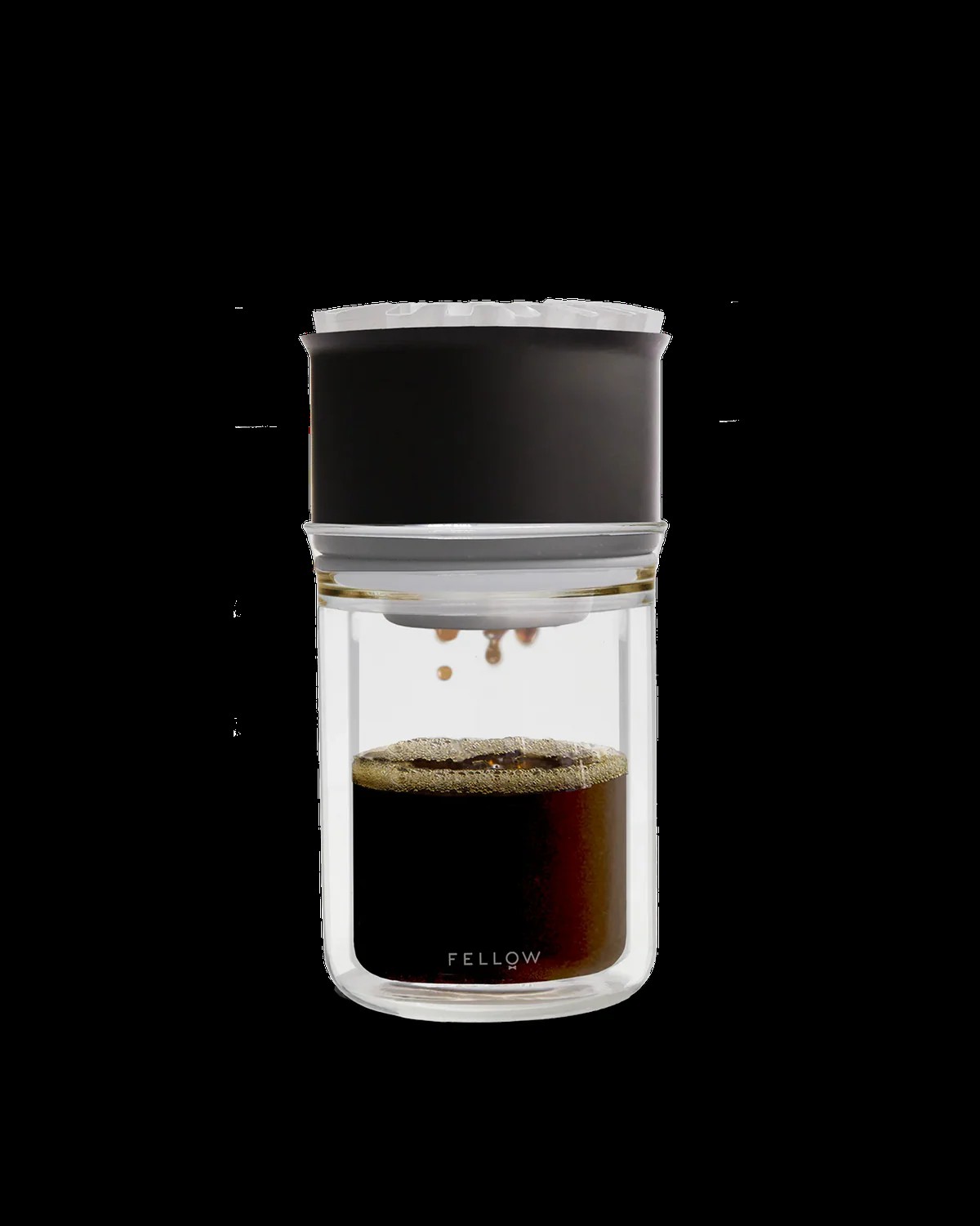
Fellow's Stagg X (cone) and XF (flat-bottom) are the premium-tier choice. Double-walled stainless steel construction means strong thermal stability and good aesthetics; the price tag (~$80-110) reflects the brand positioning rather than dramatic performance gains over a $20 V60.
What you're paying for: design, build quality, repeatability, and the Fellow ecosystem. What you're not getting: a fundamentally better cup than the cheaper alternatives. The Stagg X is a refined version of a cone brewer, not a different category. Worth the premium if the design appeals to you and budget isn't a constraint; not worth it if you're optimizing per-dollar performance.
Where to buy: Fellow direct is the manufacturer source. For Amazon shoppers, see this Fellow Stagg pour-over listing; Fellow sells direct on Amazon too, so authenticity is usually straightforward.
April Brewer
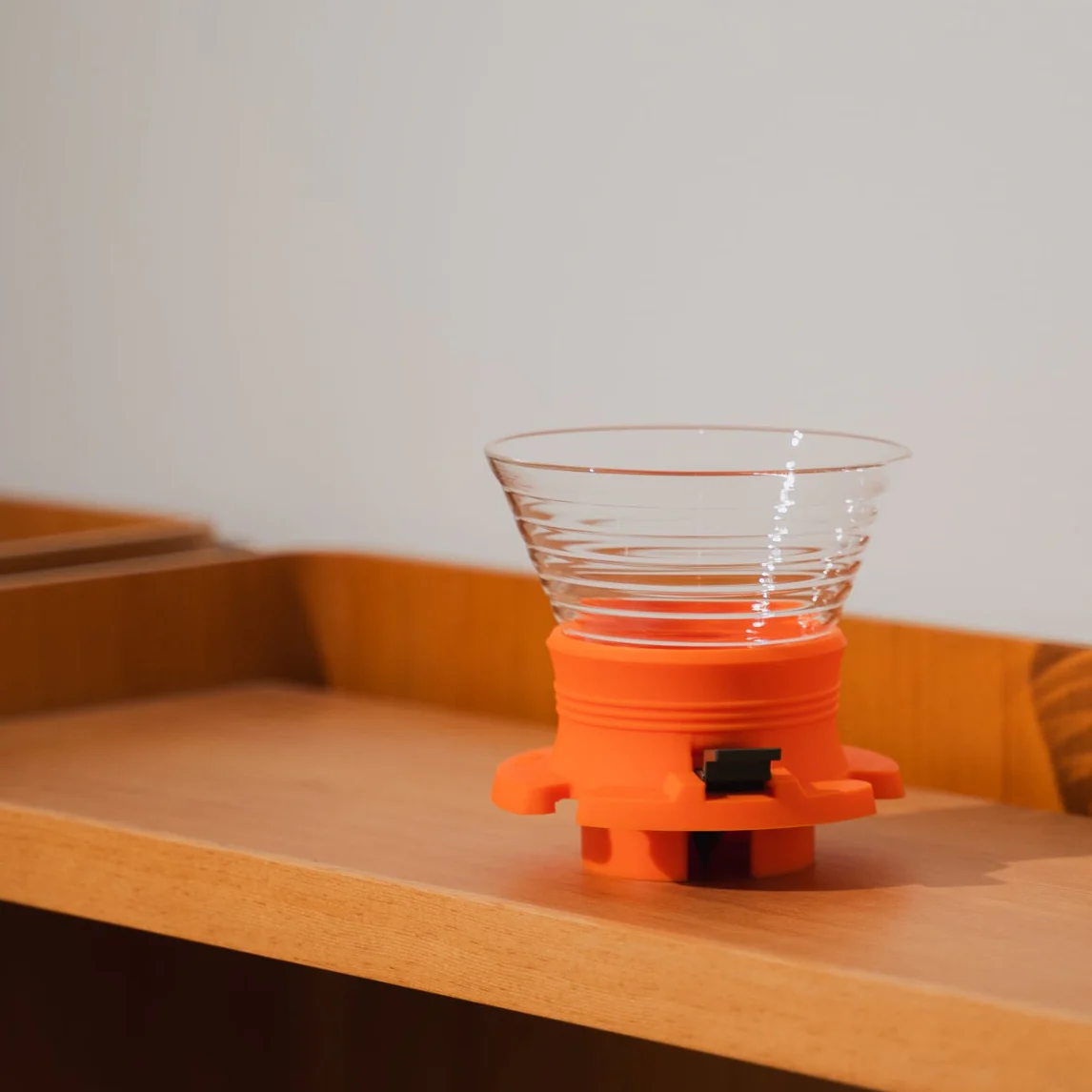
April is the Danish specialty roaster's dripper, designed by Patrik Rolf for competition use. It's similar in positioning to Origami — a competition-pedigree brewer for serious enthusiasts. US distribution is limited, which makes it harder to recommend casually. If you're building an enthusiast's setup and want something with provenance, April is worth looking at; for everyone else, it's overkill.
Where to buy: April Hybrid Brewer from April Coffee Roasters, or limited specialty retailers. Not commonly stocked on Amazon.
OXO Brew Pour-Over
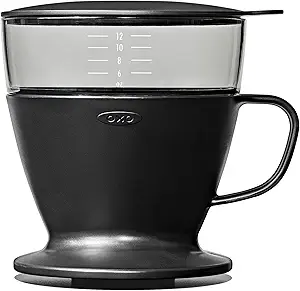
The OXO Pour-Over is what people buy at Target or Bed Bath & Beyond when they want to "try pour-over" without knowing what they want. It uses a water distribution disc to distribute pours more evenly than freehand pouring, which makes it more forgiving than a V60 for casual users. The result is acceptable but not exceptional — better than drip coffee, worse than careful pour-over.
If you found this article searching for "OXO pour-over coffee maker" specifically, the honest recommendation is to consider whether a Kalita Wave or Clever Dripper might serve you better. Both produce noticeably better cups in our view.
Where to buy: Amazon — see this OXO pour-over dripper listing. OXO is a mass-market product where Amazon is the primary channel.
Cuisinart PurePrecision (automatic)
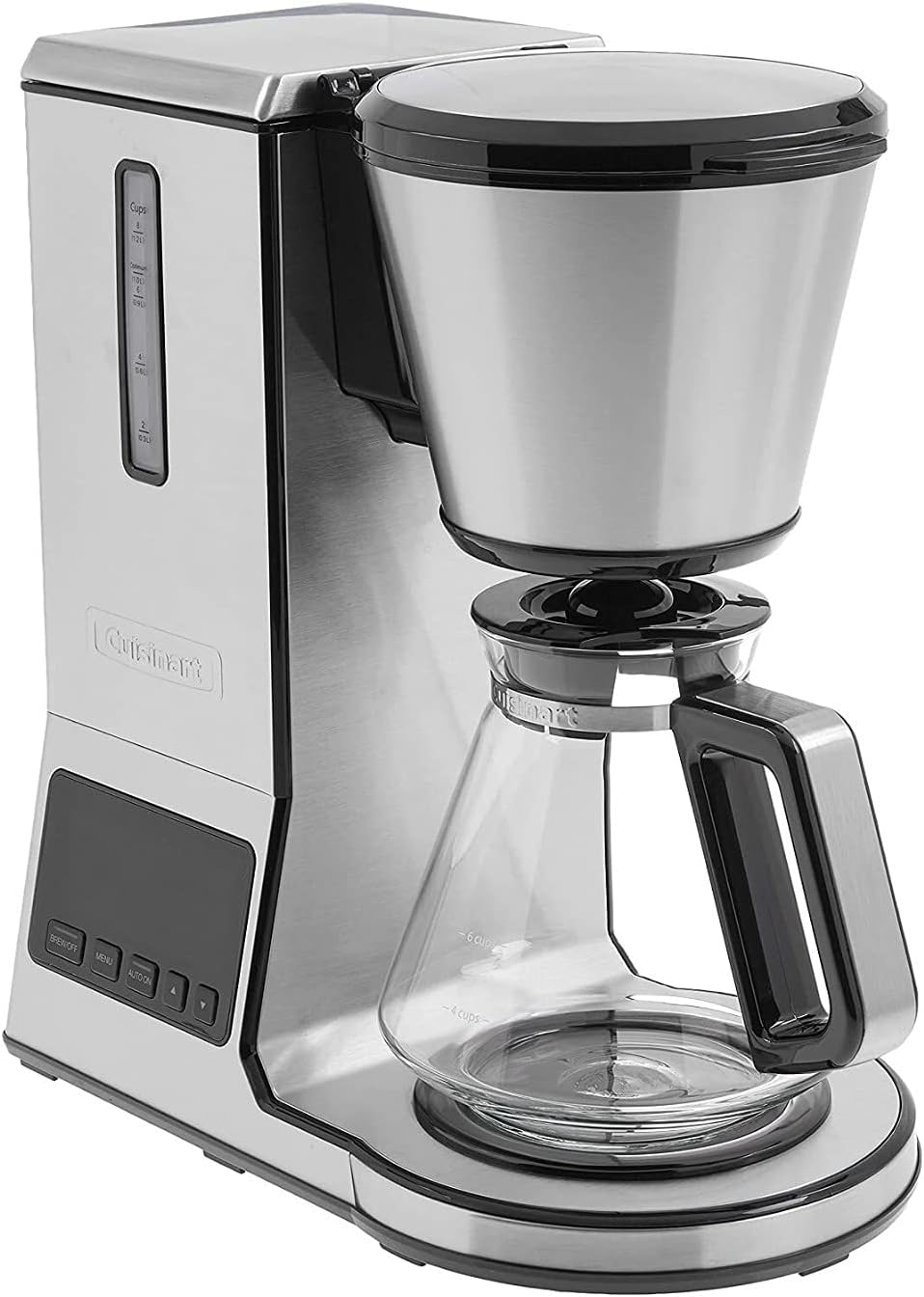
The Cuisinart PurePrecision is "automatic pour-over" — a machine that simulates manual brewing by controlling water temperature and showerhead distribution. It's SCA-certified, which distinguishes it from cheap drip machines. Bloom mode pre-wets grounds before main brew. For people who want the cup quality benefits of pour-over without doing the pouring, this category exists and the Cuisinart is one of the better options.
This is a different category than manual pour-over. It's a sophisticated drip machine, not a true pour-over experience. Worth considering for convenience-focused buyers; not relevant for people who want manual control.
Where to buy: Cuisinart direct. Amazon listings for the PurePrecision are a confused mix of current and discontinued model numbers; manufacturer direct is more reliable.
Adjacent gear: what you also need
A great pour-over setup is a system, not a single purchase. The brewer is one component. The other components matter as much.
Burr grinder
The grinder matters more than the specific brewer choice. A great grinder paired with a Melitta cone produces better coffee than a blade grinder paired with a $200 brewer. Pour-over is unforgiving of inconsistent grind — uneven particles produce simultaneous over- and under-extraction.
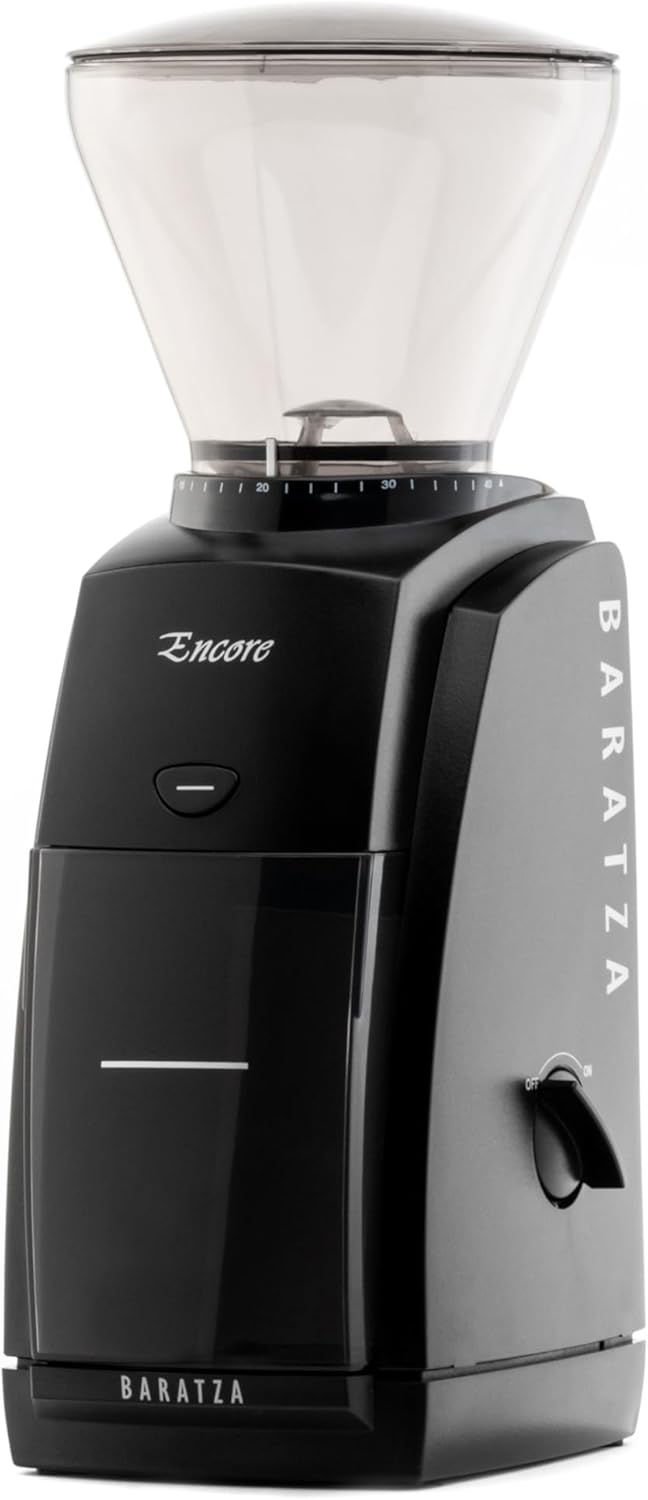
Entry-level recommendation: Baratza Encore (~$160). The reference standard for affordable burr grinders. Not perfect for espresso, but excellent for pour-over and other filter methods. Available from Amazon or Baratza direct.
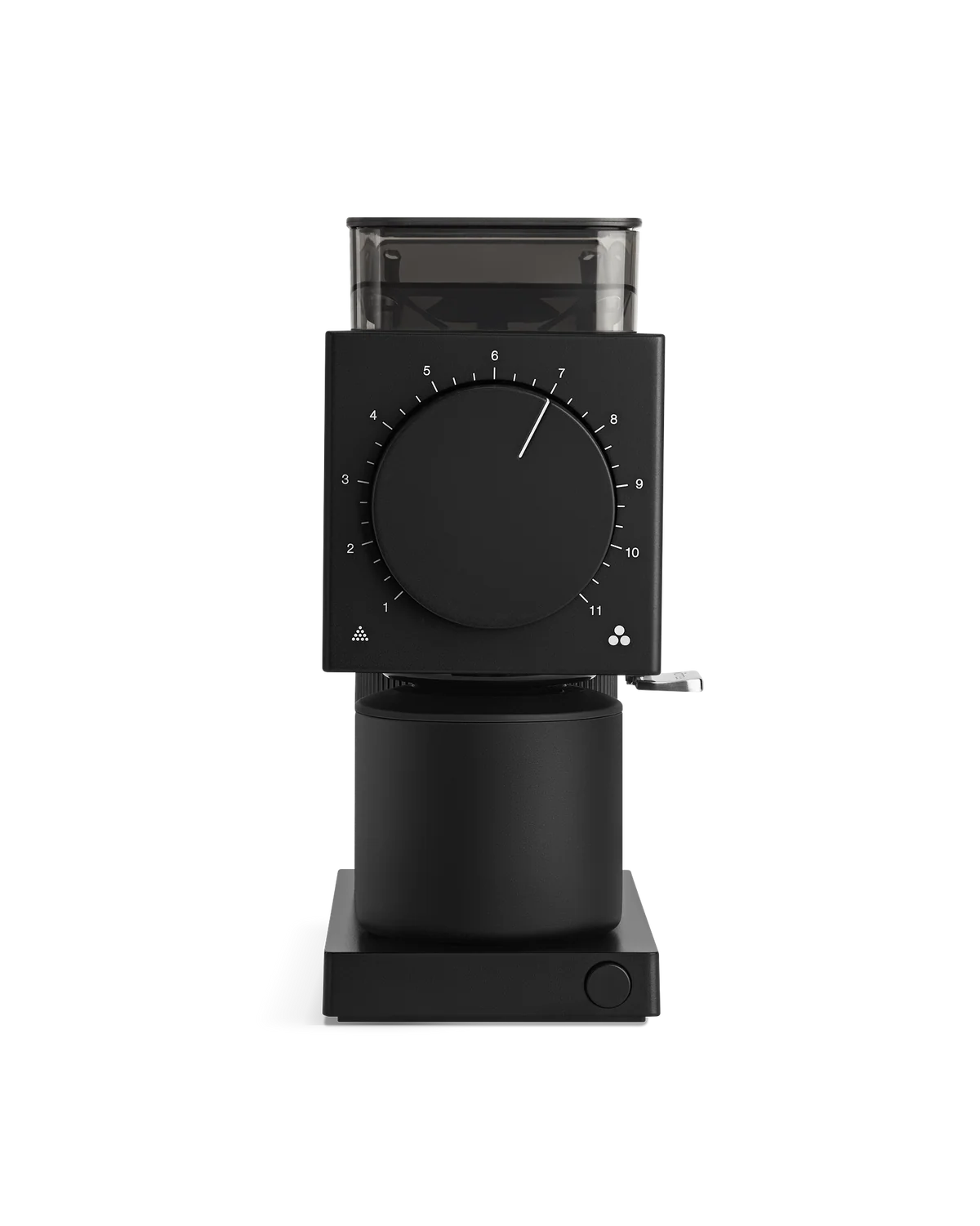
Premium recommendation: Fellow Ode Gen 2 (~$345). Single-dose grinder optimized for pour-over and drip. Larger burr set than entry-level grinders, more uniform particle distribution. Significant step up but at significant cost. Available from Amazon or Fellow direct.
Gooseneck kettle
For V60 and Origami especially, controlled pours require a gooseneck kettle. Standard kettles pour too aggressively. The kettle controls flow rate, which is a key brewing variable.
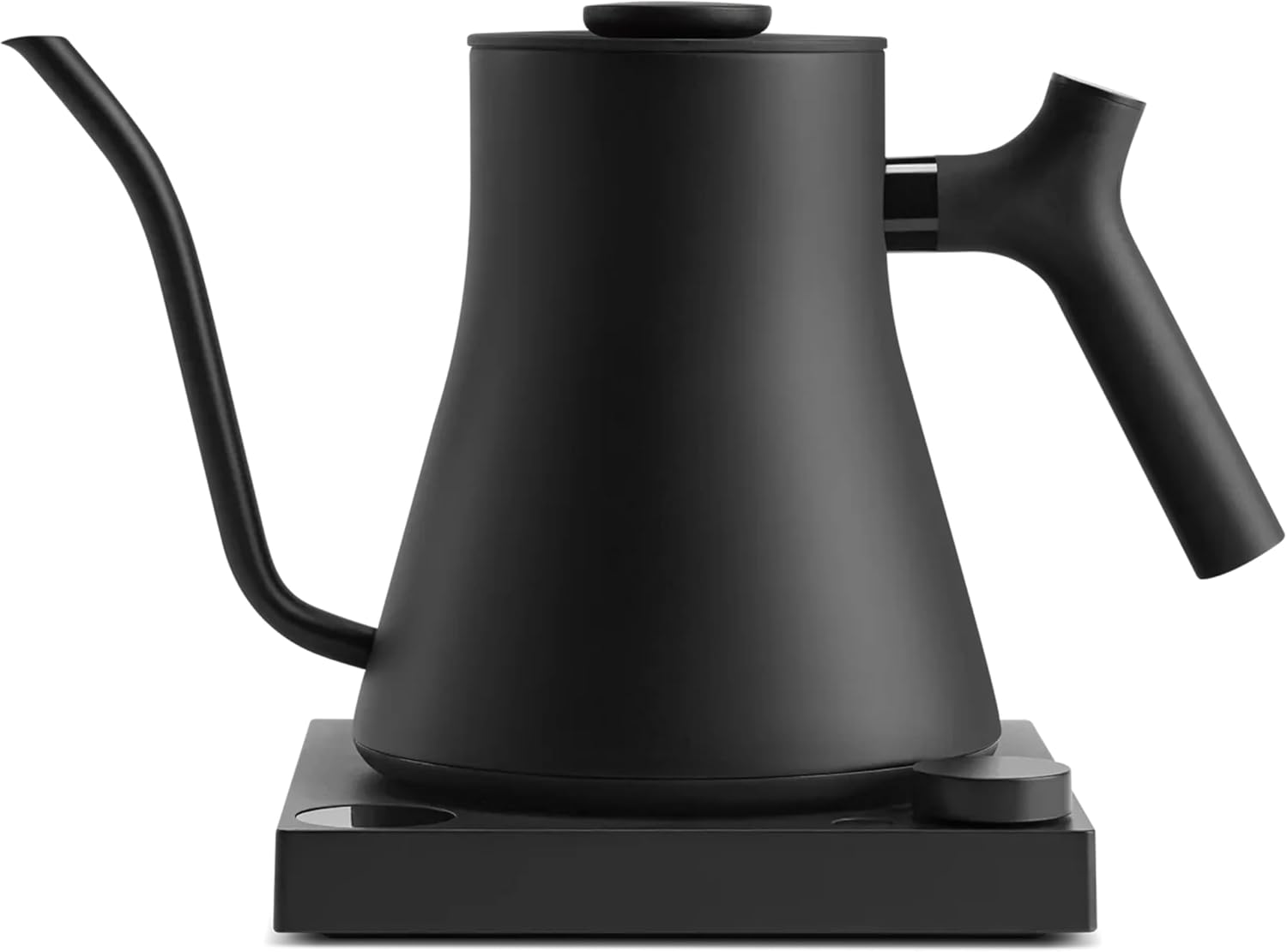
Premium recommendation: Fellow Stagg EKG (~$165). Variable temperature control, hold function, excellent build quality. The reference standard for serious pour-over. Available from Amazon or Fellow direct.
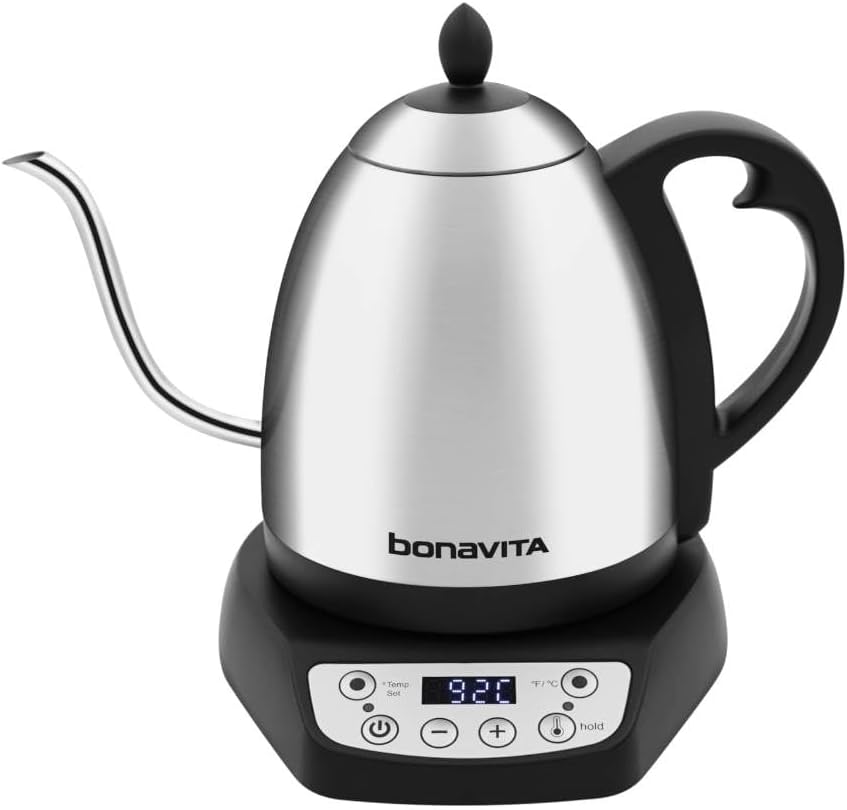
Mid-tier recommendation: Bonavita Variable Temperature (~$85). Same essential functionality as the Stagg EKG with less aesthetic refinement. A solid practical choice.
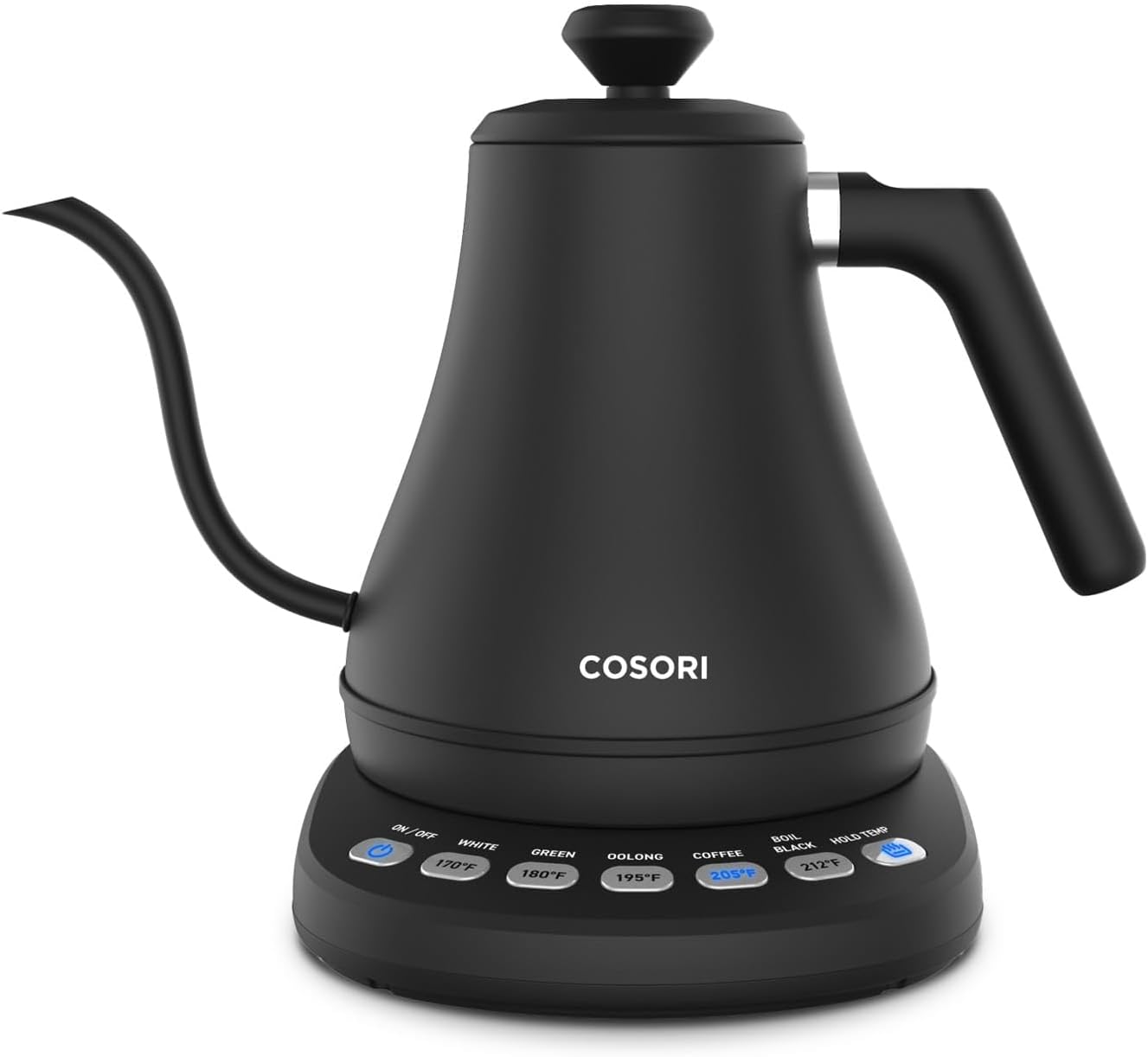
Budget recommendation: Cosori Electric Gooseneck (~$60). Variable temperature, reliable, no premium features. Gets the job done.
Scale
A scale is non-negotiable for pour-over. Volumetric measurements ("two scoops") don't work because coffee density varies. A basic kitchen scale ($15-30) works fine; a coffee scale with a built-in timer ($30-100) is better. We cover scales in detail in our pour-over ratio guide.
Filters
Each brewer requires its specific filter type. V60 cone filters, Chemex bonded squares, Kalita Wave flat-bottom filters, Origami cone or flat depending on configuration. Don't try to substitute — wrong filters produce dramatically wrong results.
Filter color matters slightly: Most brewers offer white (bleached) and natural (unbleached) filter options. Bleached filters require less rinsing before use; unbleached filters can impart a paper taste if not rinsed thoroughly. Both are food-safe; the difference is convenience, not quality.
The decision matrix
Cutting through the brewer-by-brewer detail, here's the practical version. Pick the row that matches your situation.
| If you want... | Buy this | Why |
|---|---|---|
| Best overall for most people | Kalita Wave 185 | Forgiving, consistent, handles 1-3 cups |
| Maximum control to learn the craft | Hario V60 02 | Highest skill ceiling, most expressive |
| Cleanest cup, brewing for multiple people | Chemex 6-cup or 8-cup | Thicker filter produces unique clarity |
| Specialty quality without learning pour-over | Clever Coffee Dripper | Immersion + paper, no pour technique needed |
| Flexibility across brewing styles | Origami Air | Cone or flat behavior depending on filter |
| Already own a Melitta, wondering if to upgrade | Yes, eventually | Good enough with limits; specialty coffee deserves better |
| Premium design and aesthetic | Fellow Stagg X | Refined version of cone brewer; pay for design |
| Convenience-focused, want the cup quality | Cuisinart PurePrecision | Automatic that simulates pour-over (different category) |
The single brewer most readers should buy is the Kalita Wave 185. It produces excellent cups with less skill required than the V60, accommodates most household brewing volumes, and the only meaningful drawback (Wave filter availability) is solved by ordering filters online once a year.
The single brewer most enthusiasts should add to a setup is the Origami, specifically the Air. The flexibility of switching between cone and flat-bottom behavior on demand is unique among pour-over brewers, and once you understand pour-over fundamentals, that flexibility becomes meaningful.
The brewer that's most underrated is the Clever Dripper. Most pour-over guides skip it because it's not glamorous. The actual brewing performance is excellent, and the elimination of pour technique as a variable is genuinely valuable for many users.
A note on freshness
Pour-over reveals coffee freshness more aggressively than any other brewing method. A perfectly tuned V60 with a 6-week-old bag still produces flat coffee. A casual Clever brew with a peak-window bag tastes better than a competition pour-over with stale beans.
This is why pour-over enthusiasts care about roast dates more than almost any other coffee subculture. The method exposes staleness immediately. With drip coffee, you might not notice that your bag is three weeks past peak — the heavier extraction and machine-uniform pour mask the difference. With pour-over, you taste it.
If you're investing in pour-over equipment, also invest in tracking your beans. day9 logs your bag in ten seconds and notifies you on the day it hits peak — so you brew on the days the beans are most expressive, not the days you remember to look at the calendar.
What to read next
- How to brew pour-over coffee: a complete guide — the full method, with troubleshooting
- Pour-over coffee ratio guide — full ratio reference with interactive calculator
- Coffee freshness timeline — what's happening to your beans day-by-day
- Does coffee expire? — what staleness actually is and how to spot it
day9.coffee · Coffee peaks on day nine.